

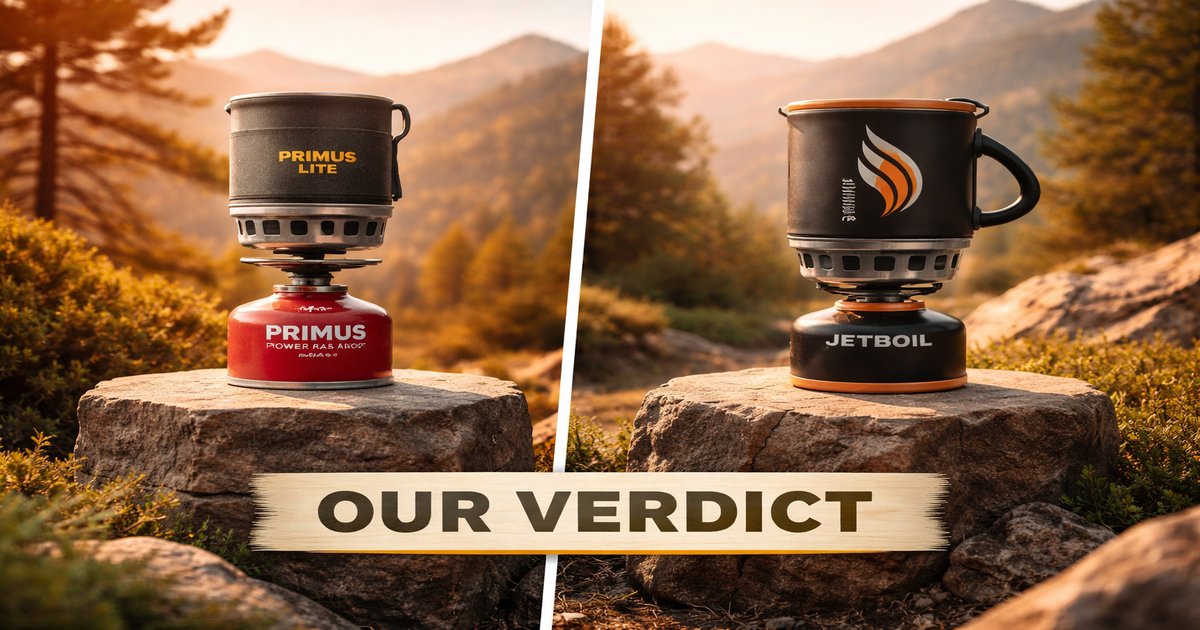
You’re out in the wilderness, and the sun is setting. You need a hot meal fast, but your stove options are limited. Should you go for the Primus Lite or the Jetboil? Let’s dive into the nitty-gritty to see which one will fuel your outdoor adventures best.
| Feature | Primus Lite | Jetboil |
|---|---|---|
| Boil Time (1L) | 4:30 minutes | 2:30 minutes |
| Weight | 390g | 400g |
| Fuel Efficiency | 0.6L per 100g canister | 0.5L per 100g canister |
| Integrated Ignition | ✓ | ✓ |
| Price | $90 | $100 |
| Wind Resistance | ✗ | ✓ |
✅ primus lite stove Pros
- Lightweight and portable, making it ideal for backpacking.
- Excellent fuel efficiency, stretching your gas usage.
- More affordable, providing great value for the price.
❌ primus lite stove Cons
- Slower boil time compared to Jetboil.
- Poor wind resistance, affecting performance in breezy conditions.
✅ jetboil Pros
- Fast boil time, perfect for quick meals.
- Outstanding wind resistance, maintaining performance in adverse conditions.
- Durable build quality, designed for rugged adventures.
❌ jetboil Cons
- Heavier than some other ultralight options.
- More expensive, which might not suit budget-conscious buyers.
Performance in Real-World Conditions
When it comes to performance, Jetboil takes the crown with its rapid boil time of just 2:30 minutes for a liter of water. This makes it a lifesaver when you need a hot meal quickly. Its superior wind resistance ensures that even in breezy conditions, you can maintain an efficient cooking process. On the other hand, the Primus Lite, while slower at boiling, excels in fuel efficiency. If you’re on a longer trek and need to ration your gas, the Primus Lite stretches your canister further. Choose Jetboil for speed; opt for Primus Lite if you’re counting grams of gas.
Build Quality and Portability
Both stoves are robust, but they cater to slightly different needs. The Jetboil feels like it’s built to withstand a nuclear apocalypse. This durability is great if you’re rough on your gear, but it adds a bit of weight. Meanwhile, the Primus Lite is lighter and easier to pack, a boon for minimalist backpackers. Its compact design doesn’t skimp on durability; it’s just more efficient with its materials. If every gram counts on your trek, Primus Lite is your go-to. If you need something that can take a beating, stick with Jetboil.
Value for Money
With a price tag of around $90, the Primus Lite offers excellent value, especially if you’re a casual camper or someone who doesn’t need lightning-fast boil times. It’s reliable and does what it says on the tin. The Jetboil, at $100, offers more in terms of performance and features like wind resistance and faster boiling. It justifies its higher price for those who prioritize these aspects. If you’re a frequent camper facing adverse conditions, the Jetboil’s extra cost is worth it. Budget-conscious? The Primus Lite won’t disappoint.
Neither stove is flawless. The Primus Lite struggles in windy conditions, so you might want to bring a windscreen. Jetboil, while fast, can be a fuel guzzler if you’re not careful, which could leave you high and dry if you’re not packing extra canisters. Always plan for these quirks to avoid a cold meal under the stars.
Our Final Verdict: Which One Should You Buy?
If you’re a backpacker who counts every ounce and wants to maximize fuel efficiency, the Primus Lite is your match. It’s affordable, lightweight, and gets the job done with minimal fuss. For those who want speed and reliability in any weather, and don’t mind paying a bit more for it, the Jetboil is your trusty companion. It’s perfect for gnarly conditions and speedy meals.
Is the Primus Lite stove compatible with all gas canisters?
Yes, the Primus Lite is compatible with most standard threaded canisters, making it versatile for international travel.
How long does a gas canister last with the Jetboil?
On average, a 100g canister will last about an hour of burn time, but this varies depending on the conditions and usage.
Can you use the Jetboil in windy conditions?
Absolutely. The Jetboil’s design includes wind resistance features, making it suitable for cooking in breezy environments.