

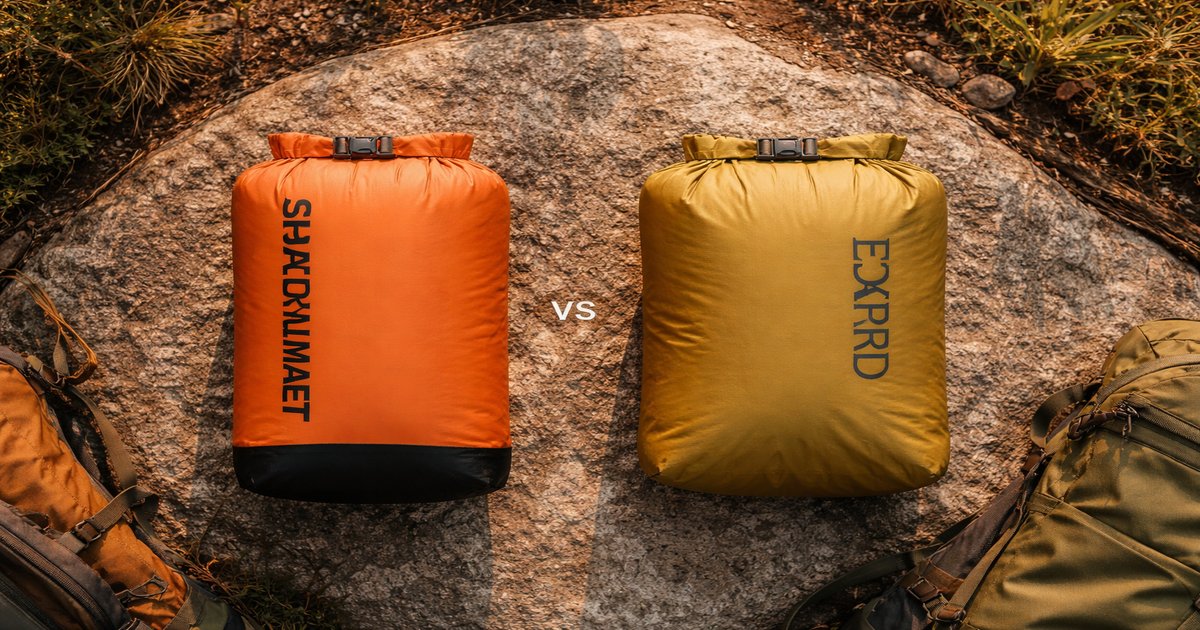
You’re about to hit the trail for a weekend of camping, and you’ve packed everything but the kitchen sink. But wait, is your gear going to stay dry if the skies open up? This is where a reliable dry bag becomes your best friend. Let’s see how the Sea to Summit and Exped dry bags measure up when it comes to keeping your gear bone dry.
| Specification | Sea to Summit | Exped |
|---|---|---|
| Material | 70D Nylon | 70D PU-coated Taffeta Nylon |
| Waterproof Rating | 10,000mm hydrostatic head | 15,000mm hydrostatic head |
| Weight (13L) | 2.8 oz (79g) | 3.1 oz (88g) |
| Closure Type | Roll-top with buckle | Roll-top with buckle |
| Price Range | $$ | $$$ |
| Available Sizes | 1L – 35L | 1L – 40L |
| Taped Seams | ✓ | ✓ |
✅ sea to summit Pros
- Lightweight design makes it easy to carry.
- Available in a wide range of sizes for different needs.
- Affordable price point.
❌ sea to summit Cons
- Lower waterproof rating compared to Exped.
- Material feels thinner, raising durability concerns.
✅ exped dry bag Pros
- Superior waterproof rating keeps gear ultra-dry.
- Durable material that withstands rough conditions.
- Comes in larger sizes for bigger loads.
❌ exped dry bag Cons
- Heavier than the Sea to Summit option.
- Higher price point might deter budget buyers.
Performance
Both bags claim to protect your gear from the elements, but the Exped dry bag truly excels here. With a 15,000mm waterproof rating, it’s nearly impervious to any heavy rain or accidental dunking you might encounter. The Sea to Summit, while still reliable with a 10,000mm rating, might make you a little more anxious if you’re kayaking through a downpour. If you’re planning on facing serious weather conditions, Exped gives you peace of mind that your gear will stay dry, no matter what.
Build Quality
When you’re looking for durability, the material and construction of a dry bag matter a lot. The Exped dry bag’s PU-coated Taffeta Nylon feels more robust and can take a beating, whether you’re throwing it in the back of a truck or dragging it through the woods. Sea to Summit’s 70D Nylon is lighter, perfect for when you’re counting every ounce, but it might not handle abrasion as well as Exped’s offering. If you anticipate rough handling, Exped is your go-to.
Value
Price is where the Sea to Summit shines. It’s more affordable, making it a great choice if you’re on a budget or need multiple bags for different gear. However, you do get what you pay for. Exped’s higher cost comes with superior waterproofing and durability, which could save you money in the long run if it means not having to replace gear damaged by water. Decide based on your needs: affordability vs. long-term protection.
Most reviews miss the fact that the Sea to Summit dry bag’s lighter material can wear out quicker if you’re not careful. And while Exped’s price might seem steep, the peace of mind knowing your expensive camera won’t get wet is worth it. If you plan to use your dry bag often in wet conditions, these factors should weigh heavily in your decision.
Our Final Verdict: Which One Should You Buy?
If you’re the type who heads out for a weekend hike and wants something light and cost-effective, the Sea to Summit dry bag is your best bet. However, if you’re an avid adventurer who often finds themselves in extreme weather conditions, the Exped dry bag is the investment you won’t regret. It might cost more up front, but the durability and waterproof assurance it offers make it invaluable for serious outdoor enthusiasts.
How do these dry bags handle heavy rain?
Both handle rain well, but the Exped dry bag offers superior waterproofing with its 15,000mm rating, making it better for torrential conditions.
Are these dry bags suitable for kayaking?
Yes, both are suitable, but if you’re worried about gear getting wet, Exped is the safer choice due to its higher waterproof rating.
Do these dry bags hold up over time?
Exped dry bags are built with more durable materials for long-term use, while Sea to Summit offers a lighter option that requires more careful handling to last.