

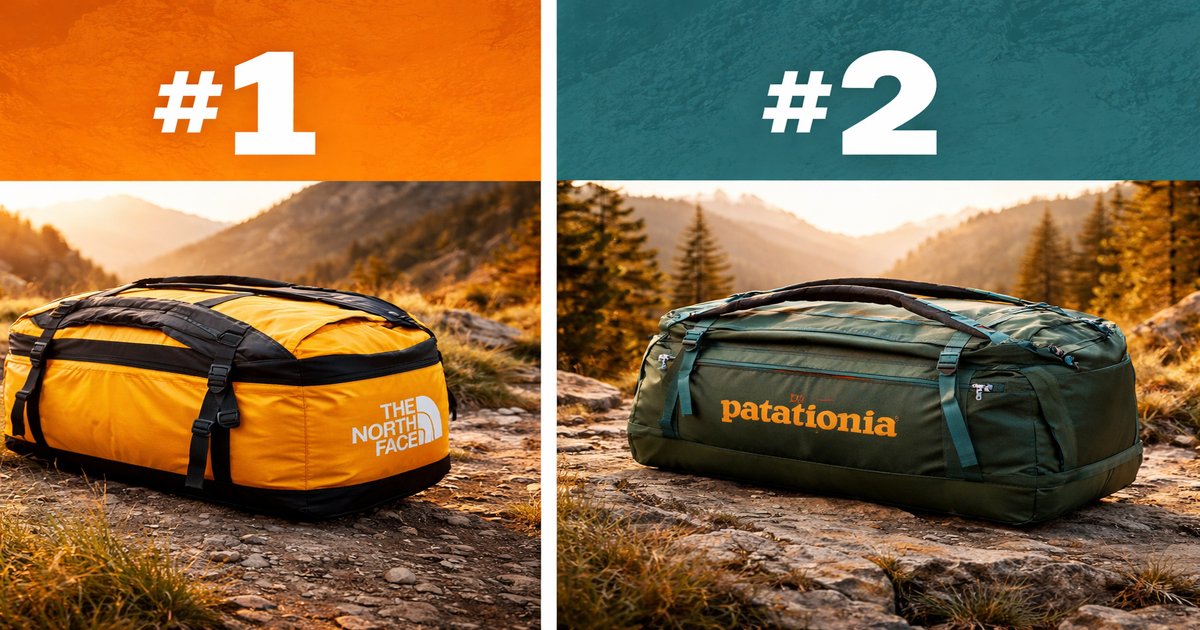
You’re planning that epic adventure or a weekend getaway, and you need a duffel that won’t let you down. Choosing between the North Face duffel and the Patagonia duffel can be tough, but don’t worry—I’ve put both to the test to help you make the best call for your travels.
| Feature | North Face Duffel | Patagonia Duffel |
|---|---|---|
| Material | Ballistic Nylon | Recycled Polyester |
| Water Resistance | ✓ | ✓ |
| Capacity | 50L, 70L, 95L | 40L, 60L, 90L, 120L |
| Weight | 1.6 kg (70L) | 1.4 kg (60L) |
| Backpack Straps | ✓ | ✓ |
| Price | $$$ | $$ |
✅ north face duffel Pros
- Extremely durable with ballistic nylon construction.
- Multiple size options catering to different needs.
- Highly water-resistant, great for wet environments.
❌ north face duffel Cons
- Heavier compared to the Patagonia duffel.
- Higher price point might deter budget-conscious buyers.
✅ patagonia duffel Pros
- Lightweight yet robust design.
- Eco-friendly with recycled polyester material.
- More affordable, providing good value for money.
❌ patagonia duffel Cons
- Slightly less durable than the North Face option.
- Water resistance is good but not as exceptional as its competitor.
Performance in Harsh Conditions
The North Face duffel shines when you’re dealing with the harshest conditions. Its ballistic nylon construction can take a beating and still look new. If you’re heading into unpredictable weather or rough terrain, this duffel stands up to the challenge. The Patagonia, while also water-resistant, doesn’t quite match the North Face in terms of sheer durability. However, if your travels are more urban or less rugged, the Patagonia’s lighter weight is a blessing, making it easier to carry around crowded airports or urban environments.
Build Quality and Eco-Friendliness
For those who value eco-friendliness, Patagonia comes out ahead with its use of recycled materials. The North Face doesn’t skimp on quality either, offering a rugged build that can handle rough handling. If you tend to be hard on your gear, the North Face duffel is less likely to show wear and tear. But if reducing your carbon footprint is a priority, Patagonia’s commitment to sustainability is a big plus.
Value for Money
When it comes to price, Patagonia offers a more budget-friendly option without sacrificing too much on performance. It’s a great pick if you’re looking to save a few bucks while still getting a reliable piece of gear. North Face, on the other hand, is an investment. You pay a bit more, but you also get a bag that’s likely to outlive many adventures. If your budget allows, the durability and performance of the North Face could justify the higher cost.
Both bags are solid choices, but watch out for the North Face’s weight, especially if you’re not a fan of carrying heavy loads. Patagonia’s eco-credentials are great, but its slightly lesser durability might not cut it for hardcore adventurers. Consider your typical travel scenarios before deciding.
Our Final Verdict: Which One Should You Buy?
If you’re an adventurer who needs a bag that can withstand the elements and doesn’t mind a bit of extra weight, the North Face duffel is your go-to. It’s built like a tank. For travelers who prioritize sustainability and want a lightweight, versatile bag for everyday adventures or urban settings, the Patagonia duffel is your best bet. It offers excellent value and a lighter footprint.
Is the North Face duffel too heavy for air travel?
It can be, especially if you’re close to your luggage weight limit. But for most trips, it shouldn’t pose a problem unless you’re packing it to the brim.
How does the Patagonia duffel hold up over time?
It’s pretty durable for regular use, but if you’re consistently rough with your gear, you might see wear faster than with the North Face.
Can both duffels be used as carry-ons?
The smaller sizes can fit in overhead compartments, but always check with your airline’s specific carry-on dimensions to be sure.